- Hindu months
- Jyeshtha; Ashadha from 19 June (purnimanta)
- Amavasya
- Friday, 4 June (Vat Savitri, Shani Jayanti)
- Purnima
- Friday, 18 June (Vat Purnima, Kabir Jayanti)
- Sangrand
- Tuesday, 15 June (Harh)
- Ekadashi
- 1, 14 and 30 June
Finding a date: the table below lists this month's festivals and vrats by date. Tap a name to see its timings and details, or to open its full guide. “Back to the list” after each festival brings you back to the table.
June 2027 at a glance
| Date | Festival or vrat |
|---|---|
| Tue 1 | Apara Ekadashi |
| Wed 2 | Pradosh Vrat |
| Thu 3 | Masik Shivratri |
| Fri 4 | Vat Savitri Vrat · Shani Jayanti · Jyeshtha Amavasya |
| Mon 7 | Maharana Pratap Jayanti |
| Sun 13 | Ganga Dussehra |
| Mon 14 | Nirjala Ekadashi · Gayatri Jayanti |
| Tue 15 | Sangrand: Harh begins · Mithuna Sankranti |
| Wed 16 | Pradosh Vrat · Muharram (Ashura) (expected) |
| Fri 18 | Jyeshtha Purnima · Vat Purnima · Kabir Jayanti · Snana Purnima |
| Tue 22 | Angarki Sankashti Chaturthi |
| Wed 30 | Yogini Ekadashi |
Festivals with their own guide are linked; the monthly vrats are described below. Muharram (Ashura) is described below; other festivals of the month are not covered on this page. The Jagannath Rath Yatra follows on Monday, 5 July.
Pradosh Vrat
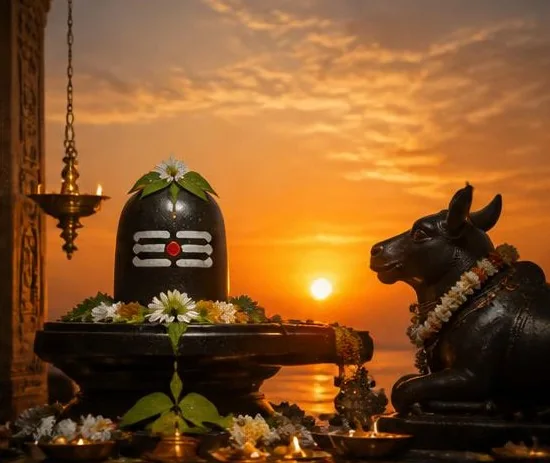
Both Pradosh Vrats in June fall on a Wednesday, which some calendars call Budh Pradosh. The puja is done in the pradosh kaal, the hour and a half after sunset.
- Wednesday, 2 June: the Krishna Trayodashi runs from 8:29 AM on 2 June to 6:34 AM on 3 June. Sunset in New Delhi is at 7:14 PM.
- Wednesday, 16 June: the Shukla Trayodashi runs from 2:30 AM on 16 June to 3:20 AM on 17 June. Sunset is at 7:20 PM.
Offer water, milk, bel leaves and white flowers to the Shivling in the evening, light a ghee lamp, chant "Om Namah Shivaya", hear the Pradosh katha and end with the Shiv aarti.
Panchakshari mantra
ॐ नमः शिवाय॥
Om Namah Shivaya.
The Pradosh vrat katha in brief
Pradosh is the sacred twilight of Trayodashi, the thirteenth tithi, dear to Lord Shiva. Tradition connects it with the Samudra Manthan: when Shiva ji held the halahal poison in his throat to save the worlds, the gods worshipped and praised him at that very Trayodashi twilight — and since then this sandhya is loved for Shiva-puja; pleased, Shiva ji is pictured in bliss upon Nandi at this hour.
The vrat-katha of Pradosh, told in the Skanda Purana tradition, is of a poor Brahmin widow who raised her son Shuchivrat and also took in an orphaned prince, Dharmagupt, whose father had died in battle and whose kingdom was lost. On Rishi Shandilya's guidance the three kept the Pradosh Vrat with regularity and devotion. In time their days turned: the prince regained his lost kingdom, honoured the mother in his palace and made Shuchivrat his companion and minister. The heart of the katha is simple: in hard days, steadiness in vrat and kindness to others never go waste.
Masik Shivratri
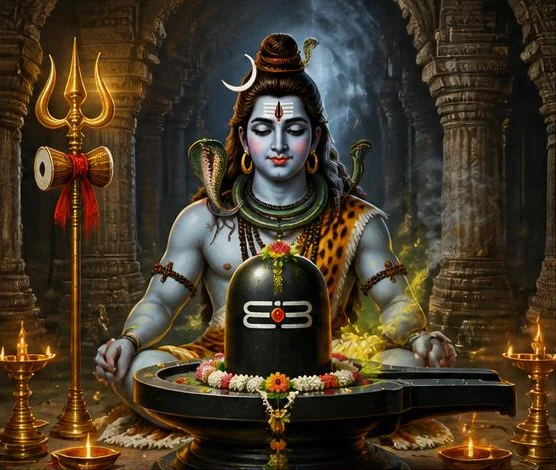
Thursday, 3 June. The Krishna Chaturdashi runs from 6:34 AM on 3 June to 4:05 AM on 4 June, covering the whole night of the 3rd, which is the night of worship. Devotees fast during the day and worship the Shivling at night with water, milk and bel leaves.
Jyeshtha Amavasya

Friday, 4 June. The new moon of Jyeshtha runs from 4:05 AM on 4 June to 1:09 AM on 5 June. It is one of the busiest Amavasyas of the year: married women keep the Vat Savitri Vrat under the banyan, Shani temples celebrate Shani Jayanti, and families take a holy dip, offer tarpan to the ancestors and give daan of water, food and sesame. In South Indian amanta calendars this new moon closes the month of Vaishakha.
Sangrand: the month of Harh begins

Tuesday, 15 June. The sun enters Mithuna (Gemini) at about 6:55 PM on 15 June, beginning Harh (Asarh), the month of the Punjabi solar calendar in which the heat is at its height before the monsoon. Gurdwaras hold the Sangrand diwan with kirtan and the reading of the Barah Maha for the new month. For Hindus the day is Mithuna Sankranti, and in Odisha it is Raja Sankranti, the main day of Raja Parba, the three-day festival of the earth.
All Sangrand dates for 2027 are in our 2027 festival calendar.
Muharram (Ashura)

Expected: Wednesday, 16 June 2027, Ashura, the 10th day of Muharram.
Expected date — the exact date depends on the sighting of the moon and may shift by a day.
Why it is remembered
Muharram is the first month of the Islamic year. On its tenth day, Ashura, Hazrat Imam Husain and his companions, who were martyred at Karbala, are remembered with deep respect. The lesson at the heart of this remembrance is to stand by truth and justice even when one's numbers are few. It is a time of mourning, quiet reflection and prayer, not of festivity. In India the remembrance is also part of a shared cultural tradition, in which people of different communities have long taken part with respect.
How it is remembered today
People gather in mosques, imambaras and homes for majlis, where the events of Karbala are recalled in speeches and marsiyas, elegies, are recited in a calm and solemn way. In India the craft tradition of the taziya, a decorated replica of the shrine of Imam Husain made of bamboo, paper, metal and wood, is carried in processions with respect, and the craftsmen who make them come from many communities. In many places sabeels offer water and sharbat to passers-by, and food is shared. Some people keep a fast on Ashura and give in charity. Dark clothes and a quiet bearing are common, and customs differ by region and tradition.
Watch the video on the festival page
Read the full Muharram guide: date, timing, traditions and FAQs.
Jyeshtha Purnima

Friday, 18 June. The full moon of Jyeshtha runs from 4:34 AM on 18 June to 6:13 AM on 19 June. It brings together several observances: Vat Purnima in Maharashtra and Gujarat, Kabir Jayanti, and the Snana Purnima of Lord Jagannath at Puri. It is also a great day for a holy dip and daan, and many families keep the Purnima fast with the Satyanarayan katha. Moonrise in New Delhi is at about 7:04 PM.
Angarki Sankashti Chaturthi
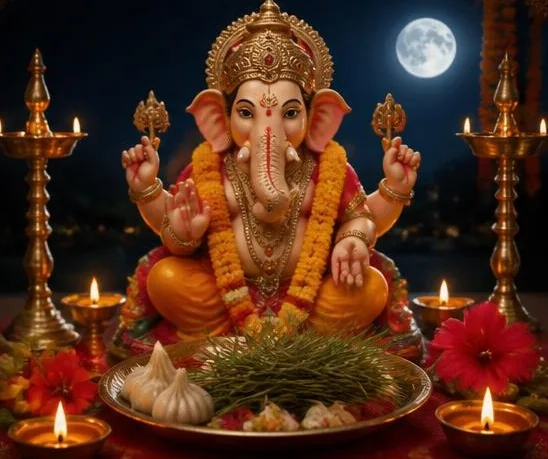
Tuesday, 22 June. When Sankashti Chaturthi falls on a Tuesday it is called Angarki, and it is the most sought-after Sankashti of all; in Ashadha it is also known as Krishnapingala Sankashti. The Chaturthi begins at 1:07 PM on 22 June and the moon rises at about 9:52 PM, when the fast is broken after arghya to the moon and the Ganesh puja with modak and durva.
The Sankashti vrat and Angarika
Sankashti Chaturthi, on Krishna Paksha Chaturthi, is the monthly vrat of Vighnaharta Ganesh — the remover of obstacles (“sankashti” itself means deliverance from troubles). There is no single katha for all months: tradition tells a separate vrat-katha each month, linked with that month's form of Ganesh. The fast is kept through the day and completed after moonrise, when the moon is worshipped and the katha heard.
The most special Sankashti is Angarika (Angarki) Sankashti, when the Chaturthi falls on a Tuesday. Tradition, linked with the Ganesh Purana, tells of Angarak, the devoted son of Rishi Bharadwaj and Mother Earth, who performed penance to Ganesh ji and on Magha Krishna Chaturthi, a Tuesday, received his darshan. Angarak asked for no wealth or power, only that his name remain joined with Ganesh ji forever. Pleased, Ganesh ji declared that Tuesday's Sankashti would be called Angarika, and tradition holds its merit equal to a full year of Sankashtis.
Ekadashi in June
Three Ekadashis fall in June 2027: Apara Ekadashi on Tuesday, 1 June, Nirjala Ekadashi on Monday, 14 June (Vaishnava calendars: 15 June), and Yogini Ekadashi on Wednesday, 30 June. Please read the health note on Nirjala Ekadashi before keeping a waterless fast in the June heat.
Dates and timings for 2027
Timings are for New Delhi (IST). Checked against our own tithi, sankranti and moonrise calculation, matching Tirth.com and the dates in our 2027 calendar.
All 2027 festivals, vrats, Purnima, Amavasya and Sangrand dates are in our 2027 festival calendar.
Questions about June 2027 festivals
Which are the main festivals in June 2027?
Vat Savitri Vrat and Shani Jayanti on 4 June, Maharana Pratap Jayanti on 7 June, Ganga Dussehra on 13 June, Nirjala Ekadashi and Gayatri Jayanti on 14 June, and Vat Purnima, Kabir Jayanti and Snana Purnima on 18 June.
When is Purnima in June 2027?
Jyeshtha Purnima is on Friday, 18 June 2027. The Purnima tithi runs from 4:34 AM on 18 June to 6:13 AM on 19 June.
When is Amavasya in June 2027?
Jyeshtha Amavasya is on Friday, 4 June 2027, the day of Vat Savitri Vrat and Shani Jayanti. The tithi runs from 4:05 AM on 4 June to 1:09 AM on 5 June.
When is Sangrand in June 2027?
On Tuesday, 15 June 2027, when the sun enters Mithuna at about 6:55 PM and the Punjabi month of Harh begins.
Festival customs vary by region and family. Follow the practice of your own family and temple where it differs from what is written here.