- Mahashivratri 2027
- Saturday, 6 March
- Tithi
- Phalgun Krishna Chaturdashi
- Nishita Kaal puja muhurat
- 12:07–12:57 AM, night of 6–7 March (New Delhi)
- Kept with
- A fast, a night vigil and the four-prahar puja
About Mahashivratri
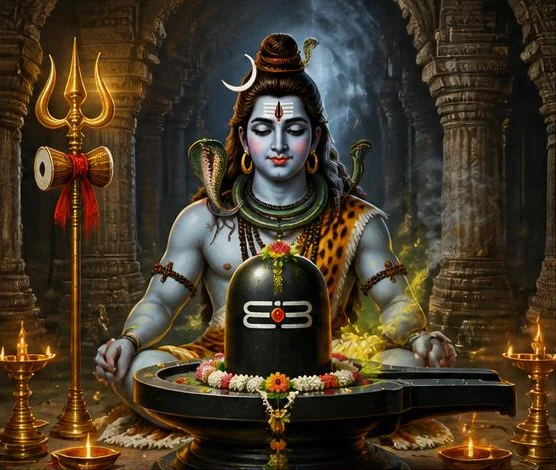
Saturday, 6 March 2027. Of the Shivratris that come every month, the one on the Krishna Chaturdashi of Phalgun is Maha Shivratri, the great night of Lord Shiva and the biggest Shivratri of the year. Tradition links it with the wedding of Shiva and Parvati and with Shiva's appearance as an endless pillar of light. Devotees fast through the day and keep a vigil at night, worshipping the Shivling through the four prahars with water, milk and bel leaves and chanting "Om Namah Shivaya". The most important puja is at Nishita Kaal, the middle of the night, which in New Delhi falls from 12:07 to 12:57 AM on the night of 6–7 March.
Why Mahashivratri is celebrated
Tradition links Maha Shivratri with the wedding of Shiva and Parvati, and many temples celebrate the night as their wedding anniversary.
It is also remembered as the night Lord Shiva appeared as an endless pillar of light, whose top and base Brahma and Vishnu could not find: the Lingodbhava, from which the worship of the Shivling is traced.
A well-known story tells of a hunter who spent the night in a bel tree in the forest, keeping awake out of fear. Without knowing it he dropped bel leaves and water onto a Shivling below, and was blessed for a Shivratri vigil he had not meant to keep. The story is told to show that even simple, sincere worship on this night is never wasted.
Tradition holds several beloved accounts of this great night, and devotees remember them all together. The most popular is that Mahashivratri marks the divine wedding of Lord Shiva and Maa Parvati — the night the great ascetic became a householder for the sake of the world. Another account goes back to the churning of the ocean (Samudra Manthan): when the deadly halahal poison emerged and threatened all creation, Lord Shiva drank it and held it in his throat to protect everyone — his throat turned blue, and he was lovingly called Neelkanth. A third account tells of the Lingodbhava: an endless pillar of fire appeared between Brahma and Vishnu, and neither could find its beginning or end — teaching that Shiva-tattva has no beginning and no end.
And then there is the humble story of the hunter: a poor hunter, hungry all day, unknowingly spent this night awake in a tree above a Shivling, dropping bel leaves and water through the night as he shifted and waited. Without knowing it, he had kept the fast, the night vigil and the abhishek — and Shiva, pleased by his innocent vigil, blessed him, and the hunter's heart turned towards kindness and non-violence. That is why devotees keep the night vigil: the door of this night is open to everyone, learned or simple.
How Mahashivratri is kept today
Devotees fast through the day and keep a vigil at night. Shiva temples stay open through the night, with abhishek, bhajans and the chanting of "Om Namah Shivaya".
Many people worship the Shivling through the four prahars, the four quarters of the night, offering water, milk and bel leaves in each, and the most important puja is at Nishita Kaal, around midnight.
Mahashivratri puja vidhi
- Take the sankalpa for the fast in the morning, and fast as you are able: fruit and milk, a single sattvik meal, or the puja and japa alone.
- In the evening, bathe, put on clean clothes and set up the Shivling or a picture of Shiva.
- Through the night, bathe the Shivling with water, milk, curd and honey, as your family's custom is, and offer bel leaves, white flowers, a lamp and incense.
- At Nishita Kaal, from 12:07 to 12:57 AM in New Delhi, do the main puja and chant "Om Namah Shivaya".
- Keep awake in prayer, bhajan or japa for as much of the night as you can, and complete the fast the next morning.
Fasting is part of the tradition, not a rule for everyone. Children, older people, pregnant women and anyone who is unwell can keep the night with the puja alone.
Panchakshari mantra
ॐ नमः शिवाय॥
Om Namah Shivaya.
"Salutations to Shiva", the five-syllable mantra at the heart of Shiva worship.
Mahashivratri 2027 date and Nishita Kaal
The Shivratri of every other month is explained in our Masik Shivratri guide, and all 2027 dates are in our 2027 festival calendar.
Questions about Mahashivratri 2027
When is Mahashivratri in 2027?
On Saturday, 6 March 2027. The Nishita puja in New Delhi is from 12:07 to 12:57 AM on the night of 6–7 March.
What is the puja muhurat on Mahashivratri?
The most important puja is at Nishita Kaal, around midnight, which in New Delhi falls from 12:07 to 12:57 AM on the night of 6–7 March 2027. Many also worship in all four prahars of the night.
How is Mahashivratri different from Masik Shivratri?
Masik Shivratri comes on the Krishna Chaturdashi of every month. The one in Phalgun is Maha Shivratri, the great night of Shiva and the biggest Shivratri of the year.
Why do people stay awake on Mahashivratri?
The night vigil, in prayer and the chanting of Shiva's name, is the heart of the festival; tradition holds that worship through this night is especially dear to Shiva.