Celebrations
Garba and Dandiya Raas: Navratri nights 2026
Where the dances come from, how they are played, and a few practical tips for the nine nights from 11 to 19 October 2026.
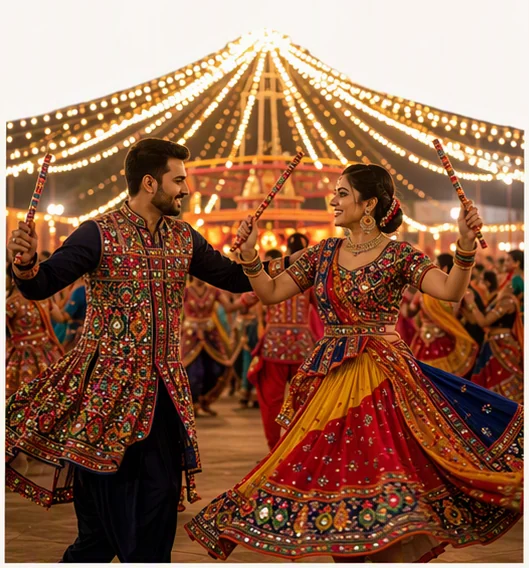
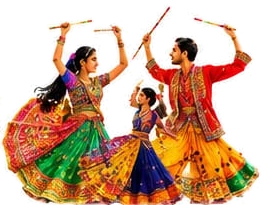
Garba
The word comes from garbha, the womb, and the clay lamp with holes, the garbo, stands for the light of life inside it. Women traditionally dance in a circle around the garbo or the Goddess's image, clapping and turning. Popular steps include do-taali (two claps), teen-taali (three claps) and the faster hinch. Garba is danced from the evening aarti onwards on every night of Navratri.
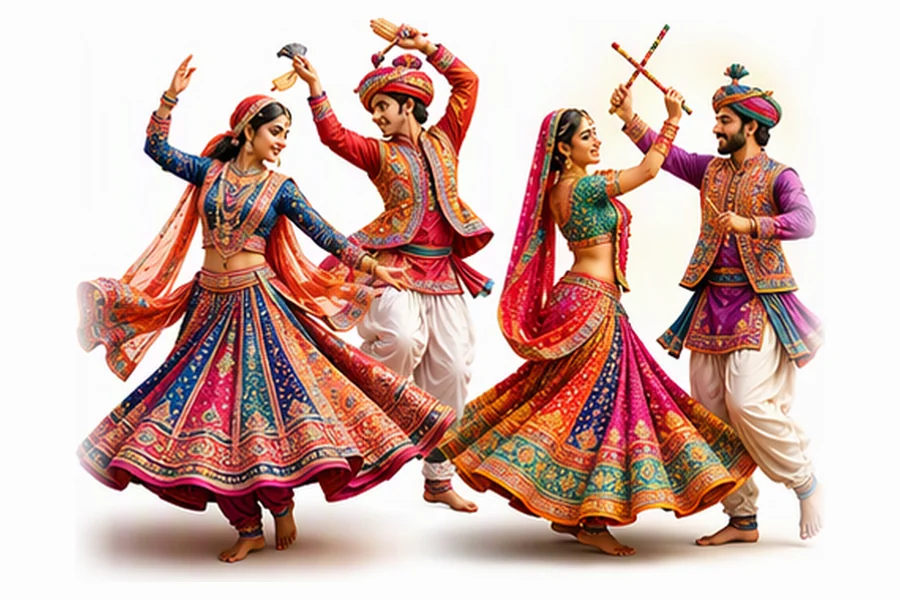
Dandiya Raas
Dandiya is played with a pair of decorated wooden sticks and is said to recreate the battle between Maa Durga and Mahishasura, the sticks standing for her sword. Dancers form two lines or concentric circles, strike sticks with the partner in front, then move on to the next. The music usually starts slow and gets faster as the night goes on. Dandiya often follows Garba later in the evening.
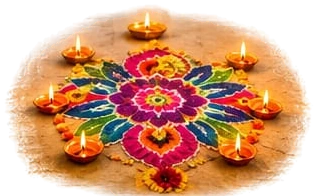
Rangoli for Navratri
A rangoli at the door or near the kalash welcomes the Goddess. Many families draw a fresh one on Day 1 and refresh it on Ashtami. Flower and lotus patterns with a diya at the centre are a popular choice, and you can use the colour of the day for the main petals.
Plan your Garba nights
Most Garba and Dandiya events run on all nine evenings. The weekend nights, Sunday 11 October and 17–18 October, are usually the busiest.
- Dress for movementChaniya choli or kediyu with a light dupatta, and pin anything that can slip.
- Mind your feetSoft juttis or flat sandals. Many venues are barefoot around the central garbo.
- Match the day's colourWear the Navratri colour of the day and your group photos will look planned.
- Book and hydratePopular venues sell passes early. Carry water, especially if you are fasting.