Puja guide
Navratri puja vidhi: sankalpa, Ghatasthapana and Sandhi Puja
A simple, step-by-step guide for doing Navratri puja at home in 2026, from the first-day sankalpa to Kanya Pujan and havan.
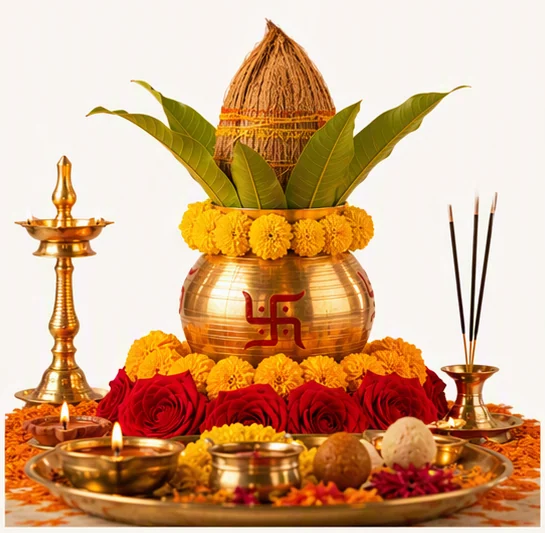
Sankalpa: the vow at the start
The sankalpa is a short, clear intention you make before beginning the nine days of worship or fasting. It is usually taken on the first morning, right after bathing and before or just after Ghatasthapana.
- Sit facing east or north. Take a little water, a few grains of akshat and a flower in your right palm.
- Say your name, your gotra if you know it, and the place where you are doing the puja.
- Name the time: for 2026 this is Vikram Samvat 2083, the month of Ashwin, Shukla Paksha, Pratipada tithi, Ravivar (Sunday).
- Say what you are taking up, for example "I will worship Maa Durga for the nine days of Navratri and keep the fast as I am able", and the wish behind it.
- Let the water flow onto the ground or into a plate in front of the Devi.
Your family priest may use a longer Sanskrit form. Saying it simply in your own language is also accepted.
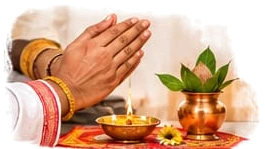
Ghatasthapana 2026
Ghatasthapana (kalash sthapana) opens Navratri. It is done on Pratipada, preferably in the first third of the day after sunrise. If you miss that window, the Abhijit muhurat around midday is the usual fallback.
The muhurat is counted from sunrise, because the Hindu day begins at sunrise. Rahu Kaal is listed because many families prefer not to start a puja in it; on 11 October it falls in the late afternoon, long after the muhurat. What sunrise and Rahu Kaal mean.
Timings are calculated for New Delhi in Indian Standard Time. Tithi start and end times are the same moment across India, but sunrise, sunset, moonrise, Rahu Kaal and muhurats change with your city. Other panchangs may differ by a minute or two.
Samagri you will need
- Clay pot or kalash
- Clean soil or sand
- Barley (jau) seeds
- Gangajal
- Mango leaves
- Coconut with red chunri
- Kalava (sacred thread)
- Roli, akshat, supari
- A coin and flowers
- Diya for akhand jyoti
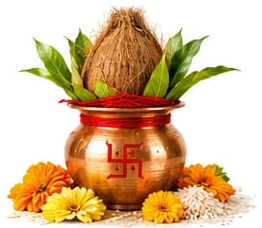
How to do Ghatasthapana
Prepare the space
Clean the puja area, place a wooden chowki with a red cloth and set the Devi's image or idol facing east or north.
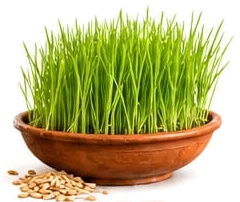
Sow the jau
Spread a layer of soil in a wide clay dish and sow barley seeds. Sprinkle a little water. The sprouts grow through the nine days.
Fill the kalash
Tie kalava around the neck, fill it with gangajal and add akshat, supari, a coin and flowers. Place it in the centre of the soil bed.
Crown it
Arrange five or seven mango leaves around the mouth and rest a coconut wrapped in red chunri on top.
Invoke the Devi
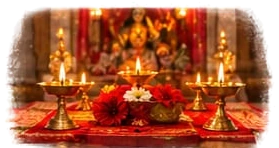
Light the akhand jyoti, offer roli and flowers, and pray to Maa Shailputri. Keep the lamp burning through Navratri if you can.
Khetri (sown barley)
The barley sown at Ghatasthapana is called khetri or jaware. Keep it watered lightly every day. On Dashami the sprouts are offered to the Devi and then shared, often tucked behind the ear or kept in the puja place for the year.
Daily puja during the nine days
- Bathe, light a diya and offer fresh flowers at the kalash.
- Worship the Devi of the day. Each Devi page has her mantra and bhog.
- Read a chapter of the Durga Saptashati, the Devi Kavach or simply chant the day's mantra.
- Offer the bhog and do the evening aarti, "Om Jai Ambe Gauri".
Sandhi Puja and Ashtami
Sandhi Puja is performed in the 48 minutes where Ashtami ends and Navami begins: the last 24 minutes of Ashtami and the first 24 of Navami. It honours the moment Maa Durga took the form of Chamunda to kill the demons Chanda and Munda. 108 diyas and 108 lotuses are traditionally offered. Because the tithi changes at the same instant everywhere, this window is the same across India.
Kanya Pujan and havan
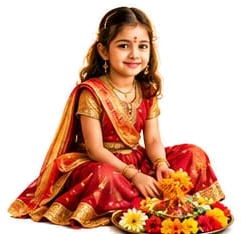
On Ashtami or Navami, families invite nine young girls, usually between two and ten years old, as forms of the Goddess. Their feet are washed, a tilak is applied, and they are served halwa, puri and kala chana with a small gift. Many also invite one boy as Langur or Bhairav. In 2026 most North Indian families will do Kanya Pujan on Monday 19 October. A havan on Navami closes the nine days of worship.
For the Navami havan in New Delhi, there are two windows while Navami tithi is running: from 10:52 AM until sunset (5:47 PM) on Monday, 19 October, or from sunrise (6:24 AM) until 12:50 PM on Tuesday, 20 October. Sunrise and sunset shift a little in other cities.

Navratri aarti
Aarti: Om Jai Ambe Gauri
This is the aarti of Maa Durga (Ambe Maa) sung every evening of Navratri, whichever form is worshipped that day. It is traditionally credited to Shivanand Swami, as its last verse says.
जय अम्बे गौरी, मैया जय श्यामा गौरी। तुमको निशदिन ध्यावत, हरि ब्रह्मा शिवरी॥ ॐ जय अम्बे गौरी॥
Jai Ambe Gauri, Maiya Jai Shyama Gauri, Tumko nishdin dhyavat, Hari Brahma Shivri. Om Jai Ambe Gauri.
माँग सिंदूर विराजत, टीको मृगमद को। उज्ज्वल से दोउ नैना, चंद्रवदन नीको॥
Maang sindoor virajat, tiko mrigmad ko, Ujjval se dou naina, chandravadan neeko.
कनक समान कलेवर, रक्ताम्बर राजै। रक्तपुष्प गल माला, कंठन पर साजै॥
Kanak saman kalevar, raktambar raajai, Raktapushp gal mala, kanthan par saajai.
केहरि वाहन राजत, खड्ग खप्पर धारी। सुर-नर-मुनिजन सेवत, तिनके दुखहारी॥
Kehari vahan raajat, khadag khappar dhaari, Sur-nar-munijan sevat, tinke dukhhaari.
कानन कुण्डल शोभित, नासाग्रे मोती। कोटिक चंद्र दिवाकर, सम राजत ज्योती॥
Kaanan kundal shobhit, nasagre moti, Kotik chandra divakar, sam raajat jyoti.
शुंभ-निशुंभ बिदारे, महिषासुर घाती। धूम्र विलोचन नैना, निशदिन मदमाती॥
Shumbh-Nishumbh bidaare, Mahishasur ghaati, Dhumra vilochan naina, nishdin madmaati.
चण्ड-मुण्ड संहारे, शोणित बीज हरे। मधु-कैटभ दोउ मारे, सुर भयहीन करे॥
Chand-Mund sanhaare, Shonit Beej hare, Madhu-Kaitabh dou maare, sur bhayheen kare.
ब्रह्माणी, रुद्राणी, तुम कमला रानी। आगम निगम बखानी, तुम शिव पटरानी॥
Brahmani, Rudrani, tum Kamala Rani, Agam Nigam bakhaani, tum Shiv patrani.
चौंसठ योगिनी मंगल गावत, नृत्य करत भैरों। बाजत ताल मृदंगा, अरु बाजत डमरू॥
Chausath yogini mangal gaavat, nritya karat Bhairon, Baajat taal mridanga, aru baajat damru.
तुम ही जग की माता, तुम ही हो भरता। भक्तन की दुख हरता, सुख संपति करता॥
Tum hi jag ki mata, tum hi ho bharta, Bhaktan ki dukh harta, sukh sampati karta.
भुजा चार अति शोभित, वर मुद्रा धारी। मनवांछित फल पावत, सेवत नर नारी॥
Bhuja chaar ati shobhit, var mudra dhaari, Manvanchhit phal paavat, sevat nar naari.
कंचन थाल विराजत, अगर कपूर बाती। श्रीमालकेतु में राजत, कोटि रतन ज्योती॥
Kanchan thaal virajat, agar kapur baati, Shrimalketu mein raajat, koti ratan jyoti.
श्री अम्बेजी की आरती, जो कोई नर गावै। कहत शिवानंद स्वामी, सुख-सम्पत्ति पावै॥
Shri Ambeji ki aarti, jo koi nar gaave, Kahat Shivanand Swami, sukh-sampatti paave.
Ending the fast
The fast is usually broken (parana) on Navami after Kanya Pujan, or on Dashami, depending on family custom. On Dashami the kalash water is sprinkled around the home and the Devi is given a respectful farewell.