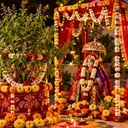
- Goru Bihu 2027
- Wednesday, 14 April
- Manuh Bihu (New Year) 2027
- Thursday, 15 April
- Assam holidays
- 14–16 April 2027
- Also called
- Rongali Bihu
- Marks
- The start of the month of Bohag
About Bohag Bihu
Assam keeps three Bihus a year, each tied to the farming cycle: Bohag or Rongali Bihu in spring, Kati or Kongali Bihu in autumn, and Magh or Bhogali Bihu at harvest in January. Bohag Bihu is the biggest and happiest of them. "Rongali" comes from rong, joy. It marks the Assamese new year at the sun's entry into Mesha, when the first rains arrive and fields are readied for sowing.
The celebrations traditionally run for about a week. The first and most important days are Goru Bihu, for the cattle, on the last day of the month of Chot, and Manuh Bihu, for people, on the first day of Bohag. Kutum Bihu, for visiting relatives, follows, and Bihu fairs and dance programmes go on for days.
Origins and tradition
Bohag Bihu is at heart a farmer's festival. In the Brahmaputra valley it marks the Assamese New Year and the start of the sowing season, when fields are prepared for the new rice crop. Its roots go back to the valley's old agrarian celebrations, and over the centuries the many communities of Assam have each added their own customs to it. The first day, Goru Bihu, honours the cattle — the farmer's true partners — who are washed, fed and thanked. From the second day (Manuh Bihu) begin the visits, blessings of elders, new clothes and husori singing from house to house. That is why Bihu carries no single story: its “katha” is the land itself — gratitude for the soil, the cattle and the rains, and joy at a new beginning.
The main days
- Goru Bihu: early in the morning the cattle are taken to a river or pond and bathed with a paste of black gram and turmeric (mah-halodhi). They are gently tapped with sprigs of dighalati and makhiyati leaves, fed slices of gourd and brinjal, and given new ropes in the evening.
- Manuh Bihu: the new year itself. People bathe, wear new clothes, seek the blessings of elders and give them a new gamosa, the white handwoven cotton towel with a red border that is the symbol of Assam.
- Kutum Bihu and after: visits to relatives and friends, community feasts, and the Mela and Chera Bihu days that close the week in many places.
Bihu dance, husori and music
Bihu dance is fast and joyful, with brisk hand movements and swaying hips, danced by young women and men in the open, often under trees or in fields. Women wear mekhela sador of golden muga or white pat silk with red patterns; men wear dhoti, kurta and gamosa.
- Instruments: the dhol, the pepa (a pipe made from buffalo horn), the gogona (a bamboo jaw harp), the taal (cymbals) and the toka (split bamboo clapper).
- Husori: groups of singers and drummers go from house to house in the village, singing Bihu songs and blessing each household for the year; they are welcomed with tamul-paan and a gamosa.
- Bihu songs: bihugeet speak of spring, love, the fields and the new year, and are sung everywhere, from village greens to big Bihu stages in towns.
Pitha, laru and jolpan
- Pitha: rice cakes such as til pitha (rolled with sesame and jaggery), ghila pitha and narikol (coconut) pitha.
- Laru: sweet balls of coconut, sesame or puffed rice with jaggery.
- Jolpan: a breakfast of chira (flattened rice), muri, akhoi or hurum with curd and jaggery.
- Doi-chira and greens: curd with flattened rice, and a dish of many leafy greens, often said to be made from 101 kinds, eaten for health at the turn of the year.
Dates and timings for 2027
Goru Bihu is kept on the day of the Sankranti, the last day of Chot, and Manuh Bihu on the first day of Bohag. Some all-India listings show only 14 April as Bohag Bihu.
Timings are for New Delhi (IST). Checked against bhaktiras.net (Goru and Manuh Bihu days), publicholidays.in, Officeholidays (Assam holidays) and samvat.
All 2027 festivals, vrats, Purnima, Amavasya and Sangrand dates are in our 2027 festival calendar.
Questions about Bohag Bihu (Rongali Bihu)
When is Bohag Bihu in 2027?
Goru Bihu is on Wednesday, 14 April 2027, and Manuh Bihu, the Assamese new year, on Thursday, 15 April. Assam's holidays for Bohag Bihu fall on 14, 15 and 16 April.
Why is it called Rongali Bihu?
Rongali comes from rong, meaning joy. It is the most festive of the three Bihus, celebrating spring and the new year.
What happens on Goru Bihu?
The cattle are bathed in a river or pond with a paste of black gram and turmeric, tapped with dighalati and makhiyati leaves, fed vegetables and given new ropes, in thanks for their work in the fields.
What is a gamosa?
A white handwoven cotton towel with a red border, given as a mark of respect and love, especially to elders on Bihu.
Festival customs vary by region and family. Follow the practice of your own family and temple where it differs from what is written here.