Shardiya Navratri begins Sunday, 11 October 2026Ghatasthapana muhurat: 6:19 AM – 10:11 AM (New Delhi)Sandhi Puja on 19 October: 10:28 AM – 11:16 AMVijayadashami (Dussehra) is on Tuesday, 20 October 2026
From Sarvapitru Amavasya on 10 October to Karwa Chauth on 29 October: every major observance of the month, the tithi behind each date, and what the day means.
Sangrand this month: Katak Sangrand falls on Saturday, 17 October 2026, the first day of the Punjabi month of Katak (the same solar transit as Tula Sankranti). All 12 Sangrand dates for 2026
Tithi times below are calculated for New Delhi in IST, the same way as our Navratri 2026 calendar. A tithi begins and ends at the same moment everywhere in India, but sunrise, sunset and moonrise change with your city, and some regional panchangs keep a festival a day apart. Please check locally before a ritual.
Saturday, 10 October 2026Sarvapitru Amavasya
Amavasya · last day of Pitru Paksha
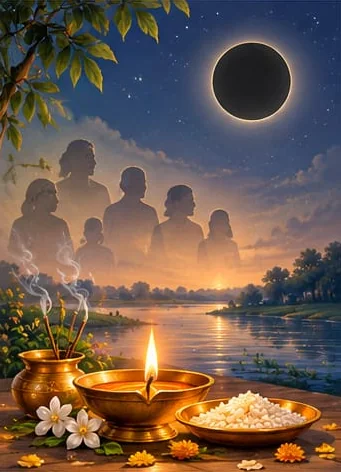
Sarvapitru Amavasya is the new-moon day that closes Pitru Paksha, the fortnight set aside for remembering one's ancestors. The name means "the Amavasya of all ancestors": shraddha done on this day is meant for every forebear, including those whose death tithi the family does not know or could not observe earlier in the fortnight. In Bengal and eastern India the same day is Mahalaya, when Devi Paksha begins and the countdown to Durga Puja starts.
Families offer tarpan (water with black sesame and kusha grass) and pind daan, cook a simple sattvik meal, and set aside portions for a cow, a dog and crows before feeding Brahmins or people in need. Many take a holy dip at a river or a tirtha such as Gaya, Haridwar or Prayagraj. Because the observance follows the Amavasya tithi, not a fixed calendar date, it moves every year.
Saturday, 17 October 2026Saraswati Puja · Tula Sankranti
Saptami, Mula nakshatra at sunrise · Sun enters Tula
What is Saraswati Puja?
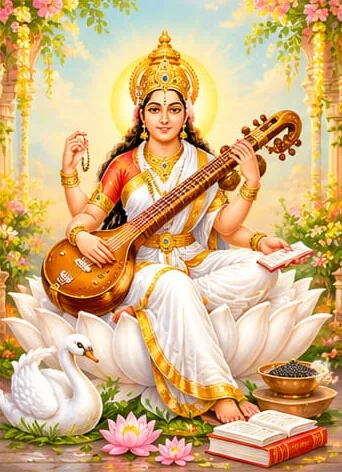
Saraswati Puja is the worship of Goddess Saraswati, the Devi of knowledge, speech, music and the arts. During Shardiya Navratri her worship follows the nakshatra rather than a fixed tithi: she is invoked (Saraswati Avahan) under Mula nakshatra, worshipped through the following days and given farewell on Vijayadashami. In 2026 Mula runs from the morning of 16 October until about 9:46 AM on Saturday, 17 October (New Delhi). Calendars that go by the nakshatra at sunrise, and most festival lists, keep Saraswati Puja on 17 October, during Saptami; some panchangs mark Saraswati Avahan a day earlier, on 16 October, so follow your family's calendar.
Why she matters
Saraswati is described in white, seated on a white lotus with a swan beside her, holding a veena, a book and a rosary. Each symbol points to the same thing: clear, patient learning. She is the goddess of the Vedas and of vak (speech), and the river Saraswati of the Rigveda carries her name.
How the puja is done
Books and instruments: students place their books, pens and notebooks, and musicians their instruments, before the goddess. In Kerala and Tamil Nadu this is "Puja Veppu", and nobody studies or plays from them until they are taken back on Vijayadashami.
Puja items: a picture or idol of Saraswati, a white or yellow cloth, white flowers and lotus if available, akshat, chandan, incense, a diya, and a kalash with water.
Offerings: fruit, kheer or payasam, milk sweets, and puffed rice or beaten rice with jaggery and coconut. Yellow and white are the colours most families choose.
Vidyarambham: on Vijayadashami, young children write their first letters, often in rice or sand, to begin their education.
Regional traditions
In South India, the main Saraswati Puja falls on Maha Navami together with Ayudha Puja. In Bengal, Odisha and Assam the big Saraswati Puja is held on Vasant Panchami in January or February, while the goddess is also worshipped with Maa Durga in the Durga Puja pandal. For students and their families it is one of the most meaningful days of the year: a moment to ask for steady progress and to thank teachers.
Tula Sankranti, also on 17 October
Tula Sankranti is the day the sun moves into the sidereal sign of Tula (Libra). In 2026 the transit falls in the evening of Saturday, 17 October, by our New Delhi calculation, so it shares the date with Saraswati Avahan. Each sankranti starts a new solar month: Aippasi begins in the Tamil calendar, Thulam in the Malayalam calendar, and Katak in the Punjabi calendar, which is why the same day is also Katak Sangrand.
In Odisha the day is kept as Garbhana Sankranti, when farmers worship the paddy, now heavy with grain, as Goddess Lakshmi. In Kodagu (Coorg) in Karnataka it is Kaveri Sankramana, when devotees gather at Talakaveri to see the sacred spring of the Kaveri rise. Charity and a holy bath are traditional on every sankranti.
Monday, 19 October 2026Durga Ashtami · Maha Navami
Ashtami in the morning, then Navami
In 2026 Saptami continues through 17 and 18 October. On Monday, 19 October, Ashtami is running at sunrise and Navami begins at 10:52 AM, so both Durga Ashtami and Maha Navami are observed that day, with Sandhi Puja at the meeting point of the two tithis. Kanya Pujan, the Navami havan and Ayudha Puja are explained in the Navratri guide.
Vijayadashami falls on Tuesday, 20 October 2026, the day after Navratri ends. Ravan Dahan, Shami puja, Durga Visarjan and the Vijay Muhurat for New Delhi are all on our Dussehra 2026 page.
Thursday, 22 October 2026Papankusha Ekadashi
Ekadashi · Ashwin Shukla
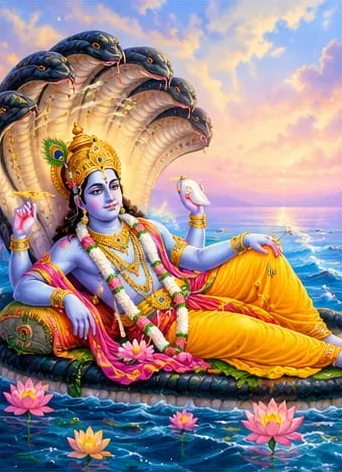
Papankusha Ekadashi is the Ekadashi of Ashwin Shukla Paksha, the first Ekadashi after Dussehra. "Papankusha" means "the goad that restrains sin", and the Puranas describe this fast as one that frees the devotee from past wrongdoing. Lord Vishnu is worshipped in his Padmanabha form.
Like every Ekadashi, it is kept with a fast from grains and beans, either fully or with fruit and milk, along with Vishnu puja, tulsi leaves, the Vishnu Sahasranama and a night of prayer. The fast is broken (parana) on the next morning, Friday 23 October, during Dwadashi. Charity of food, clothes or an umbrella is considered especially meritorious on this day.
Ekadashi tithi2:12 PM, 21 Oct – 2:48 PM, 22 Oct
Sunday, 25 October 2026Sharad Purnima · Kojagari Puja
Purnima night · Ashwin Purnima
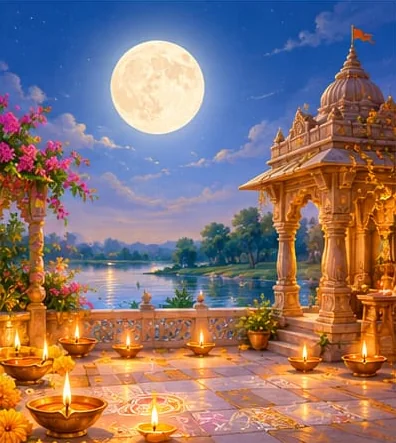
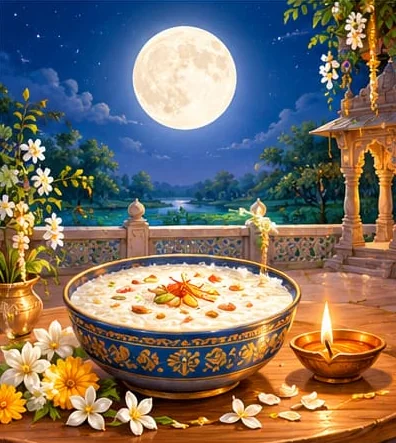
Sharad Purnima is the full moon of Ashwin, the brightest night of autumn. Tradition holds that on this one night the moon shines with all sixteen kalas and its light carries healing nectar, so families make rice kheer and leave it out in the moonlight to eat the next morning as prasad. In Braj it is remembered as the night of Krishna's Maha Raas.
Purnima tithi begins around midday on 25 October and lasts through the night, so the moonlit observances fall on the evening of Sunday, 25 October. In Bengal, Odisha, Assam and Mithila this is Kojagari Lakshmi Puja: the name comes from "ko jagarti?", "who is awake?", the question Goddess Lakshmi is said to ask as she visits homes. Families keep awake, draw alpana, and offer khichuri, coconut sweets and pitha.
Purnima tithi11:56 AM, 25 Oct – 9:41 AM, 26 Oct
Moonrise, 25 Oct (New Delhi)4:56 PM
Monday, 26 October 2026Valmiki Jayanti
Ashwin Purnima at sunrise
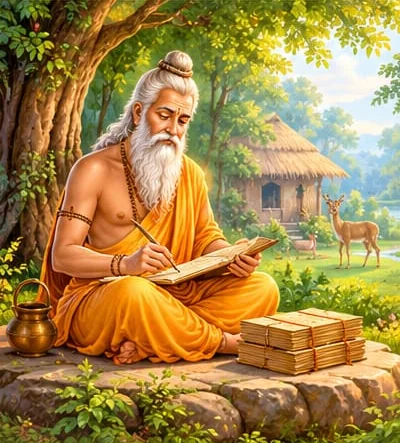
Valmiki Jayanti honours Maharishi Valmiki, the sage who composed the Ramayana and is remembered as the Adi Kavi, the first poet of Sanskrit. It is kept on Ashwin Purnima; because Purnima is the tithi at sunrise on Monday, 26 October, the Jayanti falls on that day, one day after the Sharad Purnima night.
Tradition tells that Valmiki gave shelter to Sita in his ashram, where Lav and Kush were born and learnt the Ramayana from him. Communities, especially those who revere him as their guru, take out shobha yatras, decorate Valmiki temples and hold readings from the Ramayana. In several states it is also known as Pragat Diwas.
Thursday, 29 October 2026Karwa Chauth
Kartik Krishna Chaturthi · moonrise vrat
Karwa Chauth is the fast married women keep for the long life and wellbeing of their husbands, mainly in Punjab, Haryana, Delhi, Rajasthan, Uttar Pradesh and Madhya Pradesh. It falls on the Chaturthi of Kartik Krishna Paksha (Ashwin in the amanta calendar used in parts of western and southern India), four days after Sharad Purnima.
Sargi: before dawn the mother-in-law gives a sargi of fruit, sweets, dry fruit and mathri, and the fast begins at sunrise, usually nirjala (without water).
Evening puja: women dress in bridal red with mehendi and shringar, gather with a decorated thali holding a karwa (a clay or metal spouted pot), a diya, roli and sweets, and listen to the Karwa Chauth katha while passing the thalis around the circle.
Moonrise: when the moon rises, she looks at it through a chhalni (sieve), offers arghya from the karwa, then looks at her husband through the same sieve. He gives her the first sip of water and bite of food to end the fast.
Chaturthi lasts until late evening on 29 October, so the moon is offered arghya on that night. Moonrise is the time families watch most closely, and it changes by city, sometimes by half an hour or more.
Chaturthi tithi1:07 AM, 29 Oct – 10:10 PM, 29 Oct
Moonrise, 29 Oct (New Delhi)about 8:12 PM
Sunday, 8 November 2026Coming next: Diwali 2026
Kartik Amavasya · early November
Diwali, the festival of lights, is kept on Kartik Amavasya. In 2026 the Amavasya tithi begins before noon on 8 November and is running at sunset that evening, so Lakshmi Puja and Diwali fall on Sunday, 8 November 2026, about ten days after Karwa Chauth.
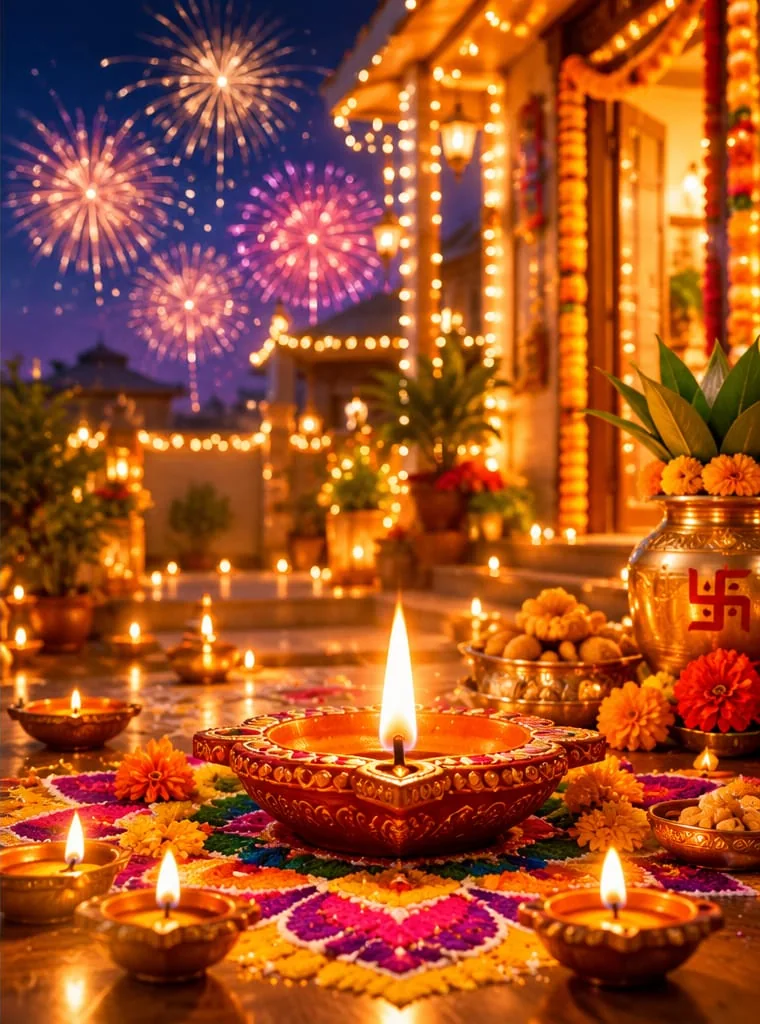
Homes are cleaned and lit with rows of diyas and strings of lights, doorways get toran and marigold garlands, and rangoli is drawn at the entrance. In the evening families worship Goddess Lakshmi and Lord Ganesh together, offer sweets, kheel-batashe and fruit, and then share the sweets with neighbours and friends. Dhanteras, Kali Chaudas, Govardhan Puja and Bhai Dooj are on our November 2026 festivals page.